
Nightshades and Autoimmune Disease: What the Evidence Says and What It Does Not
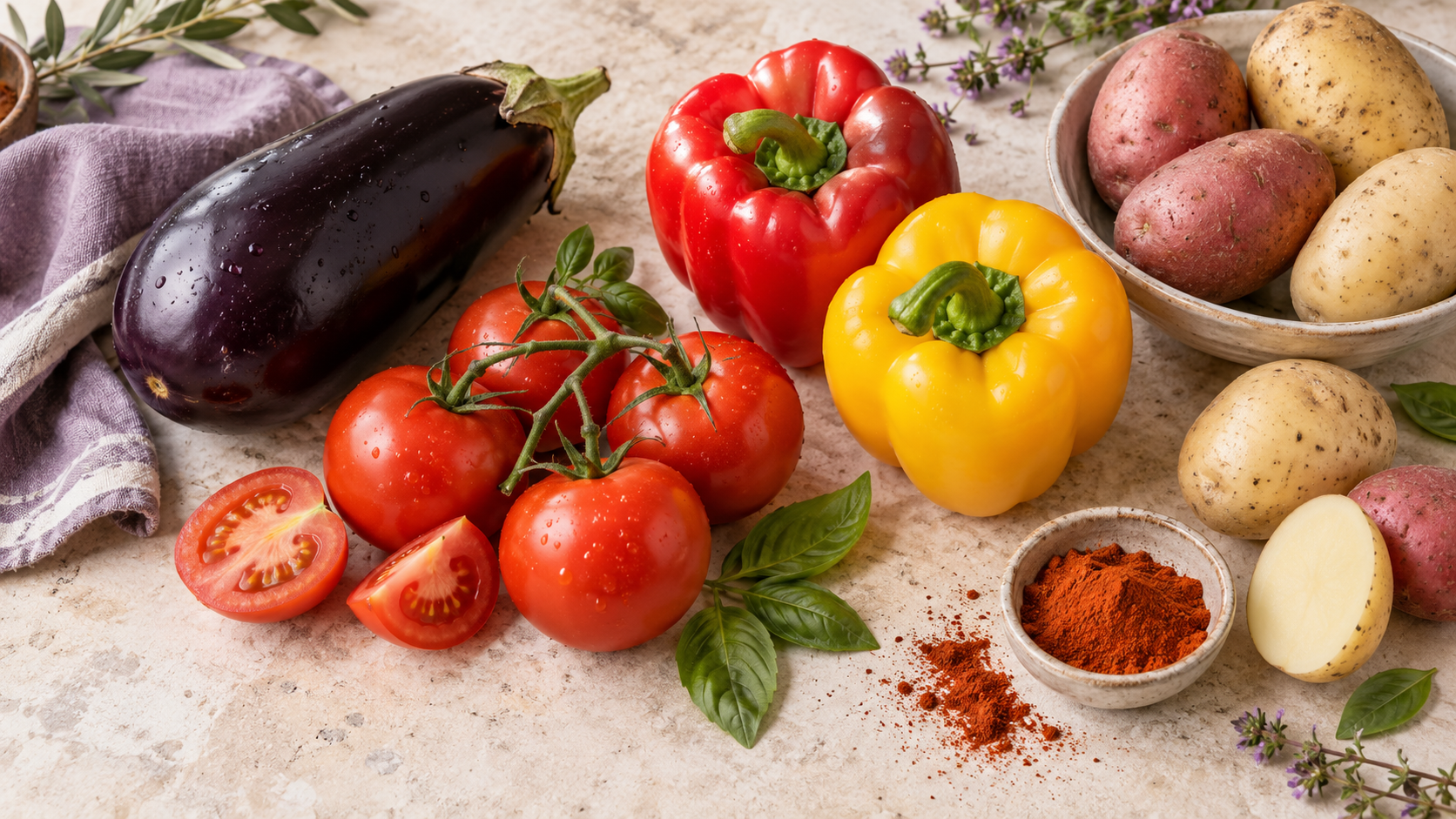
If you have an autoimmune condition, there is a good chance you have been told at some point to stop eating nightshades.
Tomatoes. Peppers. Eggplant. Potatoes.
For some people, removing these foods becomes one more step in an already long list of dietary restrictions: no gluten, no dairy, no soy, no eggs, no nightshades—and eventually, not a whole lot left to eat.
But are nightshades inflammatory for people with autoimmune disease?
The answer is more nuanced than what you may have read online.
There are biologically plausible reasons researchers have been interested in certain compounds found in nightshades. There is also some preliminary research involving restrictive dietary protocols that eliminate them. But right now, we do not have strong human evidence showing that everyone with Hashimoto’s, rheumatoid arthritis, lupus, psoriasis, inflammatory bowel disease, or another autoimmune condition needs to avoid nightshades.
At Functional Nutrition Rx, we regularly meet clients who have already eliminated multiple foods by the time they come to us. Sometimes those restrictions are helping. Sometimes nobody has ever gone back to determine whether they were actually necessary.
Our goal isn’t to make you eat tomatoes if tomatoes clearly make you feel terrible. It’s to help you understand why you’re eliminating a food, whether the evidence supports it, and whether that restriction is doing anything for you.
Let’s look at what we know about nightshades and autoimmune disease—and just as importantly, what we don’t.
This article is for educational purposes and is not a substitute for individualized medical or nutrition advice.
What Are Nightshades?
Nightshades are plants in the Solanaceae family. The ones most commonly found in the diet include:
- Tomatoes
- White potatoes
- Bell peppers
- Chili peppers
- Eggplant
- Tomatillos
- Goji berries
- Paprika, cayenne, chili powder, and other pepper-based spices
Sweet potatoes, black pepper, and peppercorns are not nightshades, despite some confusion around their names.
Nightshades contain several naturally occurring plant compounds that often come up in autoimmune discussions, including glycoalkaloids, capsaicinoids, lectins, and saponins.
Potatoes, for example, contain the glycoalkaloids alpha-solanine and alpha-chaconine. Tomatoes contain different glycoalkaloids, including alpha-tomatine. Hot peppers contain capsaicin.
These compounds aren’t automatically “bad.” Plants contain thousands of bioactive compounds, many of which can have very different effects depending on the compound, dose, food preparation, individual person, and underlying health condition.
That’s where a lot of the online conversation around nightshades gets oversimplified.
Why Are Nightshades Controversial in Autoimmune Nutrition?
The concern around nightshades is largely based on proposed effects involving the intestinal barrier and immune system.
This is particularly interesting in functional and integrative nutrition because we know that the intestinal barrier, gut microbiome, and immune system are closely connected.
Certain potato glycoalkaloids, for example, can affect cell membranes and intestinal barrier function in experimental models. One frequently cited study found that potato glycoalkaloids increased intestinal permeability in cell models and aggravated intestinal injury in mice genetically predisposed to inflammatory bowel disease.
That finding is worth studying.
But here’s the important part:
A mechanistic study in cells or mice is not the same thing as showing that eating potatoes worsens autoimmune disease in humans.
This is one of the biggest gaps between the nightshade conversation online and the research we actually have.
There are also conflicting findings depending on the compound being studied. Capsaicin, for example, has demonstrated both potentially beneficial and potentially unfavorable effects on the gastrointestinal tract depending on dose, duration, experimental model, and individual susceptibility. Much of that literature remains experimental rather than clinical.
So the science is considerably more complicated than:
Nightshades contain alkaloids → alkaloids cause leaky gut → nightshades cause autoimmune disease.
We do not have evidence supporting that chain of events as a general rule in humans.
What Does the Research Actually Show About Nightshades and Autoimmune Disease?
There is very little high-quality human research studying nightshade elimination itself.
Much of what is cited to support avoiding nightshades comes from:
- Cell studies
- Animal studies
- Mechanistic research
- Anecdotal reports
- Studies of broader elimination diets such as the Autoimmune Protocol
Those types of research can help us form hypotheses. They cannot prove that nightshades cause autoimmune symptoms in humans.
What about inflammatory bowel disease?
IBD is probably where the mechanistic argument receives the most attention.
As mentioned above, potato glycoalkaloids have aggravated intestinal inflammation in animal models predisposed to IBD.
There has also been a small human study of the Autoimmune Protocol diet in people with Crohn’s disease and ulcerative colitis.
Fifteen people with active IBD completed a six-week elimination phase followed by five weeks of maintenance. Researchers reported improvements in disease activity and quality of life.
Promising? Yes.
Proof that nightshades were the problem? No.
The AIP diet simultaneously removes grains, dairy, eggs, legumes, nuts, seeds, alcohol, refined sugars, certain oils, food additives and nightshades, while also changing overall food quality and lifestyle behaviors.
There is no way to look at that study and say, “The tomatoes did it.”
What about rheumatoid arthritis?
Nightshade avoidance is especially popular among people with rheumatoid arthritis.
Interestingly, until very recently, there was essentially no clinical research directly testing the idea. A randomized controlled trial specifically studying nightshade elimination in rheumatoid arthritis has been developed, reflecting just how large the evidence gap has been.
In 2026, researchers also published a very small pilot study of the AIP diet in nine adults with rheumatoid arthritis. After eight weeks on AIP, seven of the nine participants experienced improvements in patient-reported outcomes including pain, fatigue, sleep, and disease impact.
That is interesting preliminary research, but the study had only nine participants, was open-label and did not include a separate control group during the intervention.
And again, AIP eliminates far more than nightshades.
The study tells us that a broader dietary intervention deserves more research. It does not establish tomatoes, peppers, potatoes, or eggplant as triggers of rheumatoid arthritis.
In fact, current American College of Rheumatology guidance conditionally recommends a Mediterranean-style eating pattern for rheumatoid arthritis and conditionally recommends against routinely prescribing other formally defined restrictive diets because consistent clinical benefits have not been established.
What about Hashimoto’s?
Hashimoto’s is another condition where nightshade elimination is commonly recommended online.
A small study involving 17 women with Hashimoto’s evaluated a 10-week AIP diet and lifestyle intervention. Participants reported significant improvements in symptoms and quality of life, and average hs-CRP decreased.
However, researchers found no statistically significant changes in TSH, thyroid hormone levels, TPO antibodies, or thyroglobulin antibodies.
Again, this doesn’t mean AIP cannot help someone feel better.
It means we need to be careful about what we claim it is doing—and we certainly cannot conclude from that study that nightshade elimination improves Hashimoto’s.
Why Do So Many People Say They Feel Better Without Nightshades?
This is where we think patients’ experiences deserve to be taken seriously without automatically assigning the wrong explanation to them.
Someone may genuinely feel better after eliminating nightshades.
The question is why.
When people begin an elimination diet, they rarely change only one variable.
They may simultaneously:
- Eat fewer ultra-processed foods
- Cook more meals at home
- Increase vegetables and whole foods
- Reduce restaurant meals
- Eat less added sugar
- Reduce alcohol
- Increase omega-3-rich foods
- Become more consistent with meal timing
- Pay closer attention to symptoms
- Improve sleep or other lifestyle habits
- Remove several other foods at the same time
Symptoms can also naturally fluctuate.
Autoimmune conditions often have better weeks and worse weeks. If a food is removed during a flare and symptoms improve two weeks later, it is very easy to conclude that the food caused the flare—even when several other things may have changed.
That doesn’t mean the improvement was imaginary.
It means association doesn’t always tell us which variable was responsible.
A common pattern we see in nutrition practice is someone who has been avoiding several food groups for months or even years but has never actually reintroduced them.
At that point, we don’t know whether the diet is therapeutic anymore.
We just know it’s restrictive.
Which Autoimmune Conditions Are Most Commonly Associated With Nightshade Avoidance?
Nightshade avoidance is frequently discussed in online communities surrounding:
- Rheumatoid arthritis
- Hashimoto’s thyroiditis
- Lupus
- Psoriasis
- Crohn’s disease
- Ulcerative colitis
- Other inflammatory and autoimmune conditions
There is particularly little direct clinical evidence showing that removing nightshades improves Hashimoto’s, lupus, or psoriasis.
Research involving AIP is beginning to explore autoimmune nutrition more broadly, but these protocols change so many foods simultaneously that we cannot isolate nightshades as the active ingredient.
Is There Anyone Who Should Avoid Nightshades?
Possibly.
Individual food tolerance matters.
If every time you eat tomato sauce you experience reproducible symptoms, we aren’t going to tell you to keep eating tomato sauce because a randomized controlled trial hasn’t been published yet.
Clinical care has to consider both the evidence and the individual sitting in front of us.
A temporary nightshade elimination might be reasonable when:
- Symptoms consistently seem connected with nightshade consumption.
- More likely dietary and medical contributors have already been evaluated.
- Symptoms persist despite foundational nutrition interventions.
- A client wants to systematically test whether nightshades are contributing.
- The elimination can be completed without compromising nutritional adequacy or worsening food anxiety.
The key word is temporary.
Instead of saying, “You have an autoimmune condition, so you can never eat nightshades again,” we might remove them for a defined period, track symptoms, and then strategically reintroduce individual foods.
That’s very different from permanent avoidance.
What About the Autoimmune Protocol Diet?
The Autoimmune Protocol, or AIP, is probably the best-known diet that eliminates nightshades.
AIP removes a long list of foods during its initial elimination phase, typically including:
- Grains
- Legumes
- Dairy
- Eggs
- Nuts
- Seeds
- Nightshades
- Alcohol
- Refined and processed foods
- Certain food additives
The protocol then includes a structured reintroduction process.
AIP may ultimately prove useful for certain patients. We simply don’t have evidence supporting universal use in autoimmune disease.
The Specific Carbohydrate Diet, or SCD, is sometimes grouped into the same conversation, but it should not be considered a true nightshade-elimination diet. Traditional SCD restricts white potatoes because of their starch content, while other nightshades may be permitted.
What Are the Risks of Avoiding Nightshades Unnecessarily?
Food elimination can feel harmless.
“I’ll just stop eating them and see.”
But every food group you remove comes with a tradeoff.
Nightshades provide valuable nutrients and plant compounds.
For example:
Bell peppers are an excellent source of vitamin C and provide carotenoids and other antioxidants.
Tomatoes provide vitamin C, potassium, folate, and lycopene.
Potatoes provide potassium, vitamin B6, vitamin C, carbohydrate, and—depending on preparation—resistant starch.
Eggplant provides fiber and polyphenols, particularly in its deeply colored skin.
If you remove nightshades while also avoiding gluten, dairy, legumes, grains, eggs, nuts, seeds, and several other foods, dietary variety can shrink quickly.
And variety matters for more than just hitting your vitamin and mineral requirements.
A diverse plant intake also provides different types of fibers and polyphenols that interact with the gut microbiome.
For someone already struggling with chronic illness, unnecessarily restrictive eating can also create:
- Anxiety around food
- Difficulty eating socially
- Increased meal preparation burden
- Nutrient deficiencies
- Inadequate calorie intake
- Unintentional weight loss
- Fear of reintroducing foods
This is one reason we don’t view elimination diets as casual experiments.
Restriction should have a purpose, a timeframe, and an exit strategy.
Are Cooked Nightshades Better Than Raw?
Sometimes—but not for the reason you may think.
Cooking changes the concentration and availability of different plant compounds, but the effect varies significantly depending on the particular nightshade and cooking method.
For potatoes, research has shown that cooking and peeling can reduce glycoalkaloid concentrations to varying degrees, although glycoalkaloids are relatively heat stable compared with many other plant compounds.
This doesn’t mean everyone with autoimmune disease needs to worry about the glycoalkaloid content of their potatoes.
One practical recommendation does apply to everyone: avoid eating potatoes that are heavily green or sprouted, because glycoalkaloid levels can be considerably higher.
From a symptom standpoint, an individual may also tolerate cooked tomato sauce differently from raw tomato or tolerate bell peppers differently from spicy chili peppers.
That’s another reason testing foods individually is usually more informative than labeling the entire nightshade family as inflammatory.
What Does a Dietitian’s Approach to Autoimmune Nutrition Actually Look Like?
When someone comes to us with an autoimmune condition, the first question usually isn’t:
“Which foods can we remove?”
We want to understand the bigger picture.
That can include:
- What you’re currently eating
- Whether you’re eating enough
- Protein intake
- Fiber and plant diversity
- Omega-3 intake
- Blood sugar regulation
- GI symptoms
- Bowel regularity
- Nutrient deficiencies
- Medications and supplements
- Sleep
- Stress
- Activity
- Your relationship with food
- Previous elimination diets
- Relevant labs and medical history
For many autoimmune conditions, the stronger evidence supports working first on the overall dietary pattern rather than obsessing over one food.
Depending on the condition and the individual, that often means emphasizing:
- A Mediterranean-style or similarly anti-inflammatory dietary pattern
- Colorful fruits and vegetables
- Adequate protein
- Omega-3-rich seafood
- Extra virgin olive oil
- Nuts and seeds when tolerated
- Fiber-rich foods
- Adequate micronutrients
- Fewer ultra-processed foods
- Better blood sugar stability
- Supporting a diverse gut microbiome
For rheumatoid arthritis specifically, the American College of Rheumatology’s dietary guidance favors a Mediterranean-style pattern over more restrictive formally defined diets.
Sometimes an elimination trial still makes sense.
But it happens after we establish a reason for doing it, not because someone on social media made a list of inflammatory foods.
What Does a Structured Nightshade Elimination Trial Look Like?
If we do decide to investigate nightshades, we want the experiment to actually give us useful information.
That usually means:
1. Establish a baseline.
What symptoms are we tracking? Joint pain? Bloating? Stool frequency? Skin symptoms? Fatigue?
2. Remove the suspected foods for a defined period.
Not indefinitely.
3. Keep the rest of the diet reasonably consistent.
If you simultaneously remove seven food groups, begin exercising, stop drinking alcohol, change your supplements, and start sleeping eight hours, we won’t know what made the difference.
4. Reintroduce foods individually.
This is arguably the most important part.
Tomatoes aren’t potatoes. Potatoes aren’t peppers. Bell peppers aren’t chili peppers.
There is no reason to assume you will respond identically to every member of the Solanaceae family.
5. Watch for reproducibility.
One bad afternoon isn’t enough information. We’re looking for a consistent pattern.
The goal isn’t to prove that you “failed” a food.
The goal is to build the least restrictive diet that allows you to feel your best.
How Can a Registered Dietitian Help With Autoimmune Nutrition?
Autoimmune nutrition is an area where personalization matters enormously.
A registered dietitian can help determine whether your diet is meeting your nutritional needs, identify patterns that may be contributing to symptoms, develop an inflammation-focused eating strategy, and guide elimination and reintroduction when appropriate.
We can also work alongside your rheumatologist, gastroenterologist, endocrinologist, primary care physician, or other specialists managing your autoimmune disease.
Nutrition doesn’t replace medical treatment, and a dietitian cannot cure an autoimmune disease through food.
But nutrition can meaningfully support:
- Nutritional status
- Digestive health
- Cardiometabolic health
- Energy
- Symptom management
- Quality of life
- A healthier and less stressful relationship with food
Most importantly, you shouldn’t have to keep cutting out foods hoping that eventually you’ll stumble onto the answer.
Your nutrition plan should be built around your actual symptoms, labs, health history, lifestyle, and food tolerance—not around someone else’s list of forbidden foods.
Frequently Asked Questions About Nightshades and Autoimmune Disease
Will avoiding nightshades put my autoimmune disease into remission?
There is currently no strong evidence showing that eliminating nightshades alone can put an autoimmune disease into remission. Some people report symptom improvement after removing them, but broader elimination diets change many foods and lifestyle factors at once. Nightshade avoidance should complement—not replace—the medical treatment recommended by your healthcare provider.
How do I know if nightshades are a problem for me?
A structured elimination and reintroduction trial is the most useful way to evaluate your individual response. Symptoms should improve during elimination and return consistently when a specific food is reintroduced. Ideally, this should be completed with one of our registered dietitians so your diet remains nutritionally adequate.
Are cooked nightshades less problematic than raw nightshades?
Cooking changes certain plant compounds and may improve tolerance for some people, but cooked nightshades have not been shown to be universally safer for people with autoimmune disease. Tolerance may also differ by food and preparation method. Green or heavily sprouted potatoes should be avoided because they can contain higher glycoalkaloid levels.
Do all nightshades cause the same symptoms?
No. Different nightshades contain different compounds in different amounts. Someone may tolerate potatoes and bell peppers but experience symptoms after eating tomatoes or hot peppers. Reintroducing nightshades individually provides more useful information than treating the entire plant family as one food.
Should I follow the Autoimmune Protocol diet if I have an autoimmune condition?
Not automatically. Preliminary studies suggest that the Autoimmune Protocol may improve certain symptoms for some people, but the research remains limited, and the diet removes many foods in addition to nightshades. If you try AIP, work with one of our registered dietitians and include a structured reintroduction phase.
Final Thoughts: Restriction Should Be Intentional, Not Reflexive
The conversation around nightshades and autoimmune disease is a good example of how nutrition information can move much faster online than the research supporting it.
There are interesting biological mechanisms involving certain compounds in nightshades.
There are animal and cell studies worth paying attention to.
There are also people who genuinely report feeling better when they avoid certain nightshade foods.
What we don’t have is strong evidence showing that everyone with an autoimmune condition should eliminate tomatoes, peppers, eggplant, potatoes, and other nightshades.
And when your diet is already limited, removing another entire category of nutrient-rich foods shouldn’t be treated as a risk-free experiment.
At Functional Nutrition Rx, our approach is different.
No templates. No one-size-fits-all autoimmune diet. No eliminating foods just because they’re on somebody else’s list.
We look at your symptoms, labs, medical history, current diet, gut health, lifestyle, and what you’ve already tried. If an elimination trial makes sense, we use it strategically—and we don’t forget the reintroduction phase.
Because the goal isn’t to create the longest possible list of foods you can’t eat.
The goal is to figure out what your body needs so you can eat well, feel better, and have as much freedom around food as possible.
If you have an autoimmune condition and feel overwhelmed by conflicting food rules, you do not need another generic list of foods to avoid. Our registered dietitian nutritionists can help you identify your individual triggers, support nutritional adequacy, and build a sustainable plan without unnecessary restriction.
Learn more about our autoimmune nutrition services or contact Functional Nutrition Rx to schedule an appointment.
Written by the Functional Nutrition Rx team—registered dietitian nutritionists specializing in root-cause, evidence-informed nutrition counseling for gut health and hormonal balance. Located in Babylon, NY and available via telehealth throughout AK, CA, CO, CT, NJ, MA, PA, VA, NC, GA, and FL. Most insurance accepted.
Why might you be feeling “off”? Find your root cause pattern with our free quiz.
You’re eating well. You’ve tried supplements. Maybe you’ve even done testing. But something still feels… off. If this sounds familiar, you’re not alone. You’re not doing anything wrong. You just haven’t been given the right answers yet. Take Functional Nutrition Rx’s free quiz, It takes 2 minutes—and could completely change how you approach your health.