
Low Progesterone Symptoms in Women and What Your Diet Has to Do With It
You’ve described your symptoms to your doctor. Maybe it was the anxiety that ramps up the week before your period, the sleep that falls apart in the second half of your cycle, or the heavy bleeding that has become your new normal. And maybe you were told your labs look fine, your hormones are within range, and that stress is probably the culprit.
If that sounds familiar, this post is for you.
Low progesterone — or more precisely, progesterone that is too low relative to estrogen — is one of the most common and most overlooked contributors to the symptoms women bring into our practice every day. And because those symptoms overlap with so many other things (thyroid dysfunction, iron deficiency, anxiety disorders, perimenopause), the hormonal piece often gets missed entirely.
This is not a post about quick fixes or supplement stacks. It is a practical, evidence-informed look at what progesterone actually does, what it looks like when levels drop, and where nutrition fits into the picture. Because your food choices, your eating patterns, and your stress load all have a direct relationship with your hormones — and understanding that connection is the first step to advocating for your own health.
This post is educational and is not a substitute for individualized medical or nutritional care.
What Is Progesterone and What Does It Do in the Body?
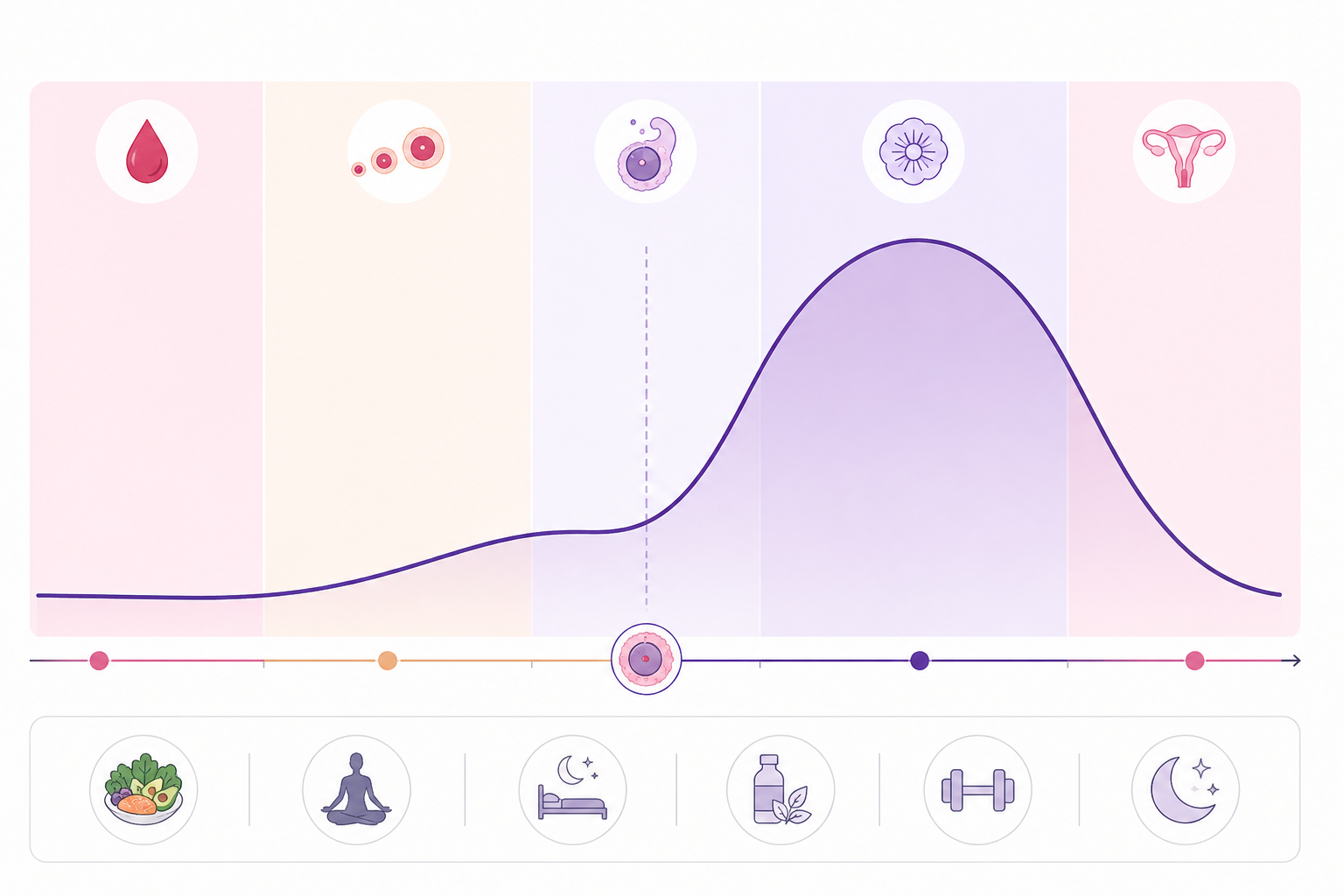
Progesterone is a steroid hormone produced primarily in the ovaries after ovulation — specifically by a temporary structure called the corpus luteum. If pregnancy occurs, the placenta takes over progesterone production. If it doesn’t, levels drop, and menstruation begins.
But progesterone does far more than support pregnancy. It plays a central role in:
- Menstrual cycle regulation — preparing the uterine lining for potential implantation and orchestrating its shedding when pregnancy doesn’t occur
- Mood and anxiety — progesterone metabolizes into a compound called allopregnanolone, which acts on GABA receptors in the brain, the same receptors targeted by anti-anxiety medications
- Sleep quality — progesterone has a calming, sedative effect that supports deeper sleep, particularly in the second half of the cycle
- Thyroid function — progesterone helps sensitize cells to thyroid hormones and supports healthy thyroid receptor activity
Progesterone and estrogen are meant to work in balance. Estrogen rises in the first half of the cycle (the follicular phase), peaking around ovulation. Progesterone rises in the second half (the luteal phase), creating a natural counterbalance to estrogen’s more stimulating effects. When progesterone is insufficient — whether because ovulation didn’t occur, because production was impaired, or because estrogen is disproportionately high — that balance breaks down.
In clinical practice, women often describe the luteal phase with low progesterone as feeling like a switch flips around day 17 or 18. The calm of the first half of their cycle gives way to irritability, overwhelm, disrupted sleep, and a kind of emotional fragility that feels completely disconnected from their actual circumstances. When they finally connect the timing to their cycle, everything starts to make more sense.
Progesterone levels also shift across life stages. They naturally decline during perimenopause — often years before estrogen does — which is why the hormonal picture of early perimenopause is frequently one of estrogen dominance relative to progesterone, even when absolute estrogen levels are not yet dramatically low.
What Are the Most Common Low Progesterone Symptoms in Women?
Low progesterone symptoms are easy to miss because they mimic so many other conditions. Here is what to look for:
- Irregular or absent periods — particularly cycles that are shorter than 24 days or vary significantly in length
- Spotting before your period begins — light bleeding or brown discharge in the days leading up to menstruation
- Heavy or prolonged periods — without sufficient progesterone to stabilize it, the uterine lining can become thickened and shed more dramatically
- Premenstrual syndrome (PMS) — mood changes, bloating, breast tenderness, and irritability in the 7–14 days before menstruation
- Anxiety and low mood — particularly in the luteal phase, because of progesterone’s role in GABA receptor activity
- Sleep disruption — difficulty falling asleep or staying asleep in the second half of the cycle
- Difficulty conceiving — progesterone is essential for implantation and early pregnancy maintenance
- Recurrent early pregnancy loss — low luteal phase progesterone is associated with implantation failure and early miscarriage
What makes these symptoms so frequently misattributed is that they are cyclical, they are subjective, and they overlap with conditions like generalized anxiety disorder, hypothyroidism, and perimenopause. Women are told they are stressed. They are offered antidepressants. Their concerns are normalized as “just PMS.” The hormonal root cause goes unexplored.
The perimenopause context deserves particular attention. Progesterone levels begin declining in the late 30s and early 40s, often well before estrogen becomes dramatically affected. This means women in early perimenopause may have labs that look “normal” in absolute terms but reveal a significant progesterone-to-estrogen imbalance that explains everything they are experiencing.
One of the most common patterns we see in practice: a woman comes in for weight loss support or fatigue, and as we dig into her history — her cycle length, her sleep quality, how she feels across the month — a clear hormonal picture emerges. She has been managing symptoms for years without anyone connecting the dots. Naming what might be happening, and having a plan to address it from a nutrition standpoint, is often the first time she feels genuinely heard.
For evidence-based guidance on menstrual cycle irregularity and hormonal symptoms, the American College of Obstetricians and Gynecologists (ACOG) and the Endocrine Society publish clinical guidelines that your physician can reference.
How Is Low Progesterone Diagnosed and What Do the Numbers Mean?
Diagnosing low progesterone requires timing. A progesterone blood test drawn at the wrong point in the cycle will tell you almost nothing useful. Testing is typically done around day 21 of a 28-day cycle — approximately 7 days after ovulation — when progesterone should be at or near its peak. For women with longer or irregular cycles, the timing shifts accordingly.
A mid-luteal progesterone level above 10 ng/mL is generally considered indicative of adequate ovulation, though some practitioners use higher thresholds (15–20 ng/mL) when evaluating fertility or symptomatic patients. Reference ranges vary by lab, which is why context and symptom pattern matter as much as the number itself.
This is also why women can feel symptomatic even when their result falls within the “normal” range. A value of 5 ng/mL may be flagged as low-normal rather than deficient, but if a woman is dealing with the full cluster of luteal phase symptoms, that number still tells a meaningful story. Lab ranges reflect population averages — they do not define your optimal.
At Functional Nutrition Rx we work closely with a medical provider to help get labs you need and also offer the Dutch Test. We help you understand how nutrition and lifestyle affect the hormonal systems your provider is monitoring — and support you in making changes that can move the needle over time.
What Causes Low Progesterone and Which Factors Are Nutrition-Related?
Progesterone production is downstream of a complex hormonal cascade, and multiple factors can disrupt it. The most clinically relevant include:
Chronic stress and elevated cortisol. This is the most significant nutrition-adjacent factor we address in practice. Progesterone and cortisol share the same precursor: pregnenolone. When the body is under chronic stress, it preferentially shunts pregnenolone toward cortisol production — a phenomenon sometimes called “pregnenolone steal.” The result is chronically suppressed progesterone, regardless of what you eat. This is the HPA-HPG axis connection: the hypothalamic-pituitary-adrenal (stress) axis and the hypothalamic-pituitary-gonadal (reproductive) axis are in direct communication, and chronic activation of one suppresses the other.
Underfueling and energy restriction. The body treats reproduction as a luxury, not a survival necessity. When caloric intake is consistently too low — whether from intentional dieting, disordered eating patterns, or simply not eating enough to meet the demands of an active life — the reproductive system is among the first to downregulate. Ovulation becomes irregular or absent, and without ovulation, progesterone production drops sharply. Research on Relative Energy Deficiency in Sport (RED-S) documents this clearly in athletic populations, but underfueling affects non-athletes just as significantly.
Blood sugar instability. Significant blood sugar swings drive cortisol release as part of the counterregulatory stress response. Over time, this keeps the HPA axis activated and suppresses the hormonal signaling needed for healthy ovulation and progesterone production.
Specific micronutrient deficiencies. Several nutrients are directly involved in progesterone synthesis and metabolism:
- Zinc is required for the development of the corpus luteum and for progesterone secretion
- Vitamin B6 supports the enzymatic pathways involved in progesterone production and is also involved in reducing estrogen clearance
- Magnesium supports HPA axis regulation and is involved in over 300 enzymatic reactions, including those related to hormone production
- Vitamin C is concentrated in the corpus luteum and plays a direct role in progesterone secretion
Body composition extremes. Both very low body fat and significant excess adipose tissue can disrupt hormonal signaling. Adipose tissue is hormonally active — it converts androgens to estrogen, which can shift the progesterone-to-estrogen ratio unfavorably.
In practice, the cases that are most striking are not the ones with dramatic deficiencies. They are the women who eat “pretty well” but are chronically undereating relative to their output, skipping meals, under-sleeping, and running on stress — and whose hormones reflect exactly that. When energy availability is addressed and micronutrient gaps are filled, the change in how they feel across their cycle is often significant.
What Foods and Eating Patterns Support Healthy Progesterone Levels?
Nutrition cannot manufacture progesterone out of thin air. But it creates the conditions that make healthy progesterone production possible — and that distinction matters.
Adequate caloric intake is foundational. Before any specific foods or nutrients, the most important thing is eating enough. This means enough total calories to support your energy output, your hormonal function, your immune system, and your daily life. For women who have been in a dieting mindset for years, this is often the most uncomfortable and the most necessary shift.
Dietary fat supports hormone synthesis. Progesterone is a steroid hormone, and steroid hormones are made from cholesterol. Chronically low-fat diets can impair the substrate availability needed for hormone production. Adequate intake of healthy fats — from foods like avocado, olive oil, eggs, nuts, seeds, and fatty fish — supports this process.
Carbohydrates matter too. Carbohydrate restriction drives cortisol. Adequate carbohydrate intake — especially around activity — supports blood sugar stability, reduces the cortisol burden on the HPA axis, and helps protect the hormonal signaling needed for ovulation.
Key nutrients and where to find them:
| Nutrient | Why It Matters | Food Sources |
|---|---|---|
| Zinc | Corpus luteum development, progesterone secretion | Red meat, oysters, pumpkin seeds, legumes |
| Vitamin B6 | Progesterone synthesis pathways | Poultry, salmon, bananas, chickpeas, potatoes |
| Magnesium | HPA axis regulation, enzymatic hormone production | Leafy greens, legumes, pumpkin seeds, dark chocolate |
| Vitamin C | Direct role in corpus luteum progesterone secretion | Bell peppers, citrus, kiwi, strawberries |
| Healthy fats | Cholesterol substrate for steroid hormone production | Avocado, eggs, olive oil, fatty fish, nuts |
Blood sugar stability as a strategy. Eating regularly — not skipping meals, pairing carbohydrates with protein and fat, avoiding extended periods of fasting — keeps cortisol from spiking in response to low blood sugar. This is not about following a specific diet. It is about creating a consistent, nourishing rhythm that your body can rely on.
What undermines all of the above: chronic dieting, meal skipping, and under-eating. You can eat every nutrient on the list above and still suppress your progesterone if you are not eating enough overall. Energy availability comes first.
What About Stress, Sleep, and Lifestyle Factors?
You can eat a beautifully balanced diet and still have disrupted progesterone if your stress load is high and your sleep is poor. This is one of the most important things we communicate to clients, because it prevents the frustration of doing “everything right” with food and not understanding why they still feel off.
Psychological stress activates the HPA axis and drives sustained cortisol elevation. As described above, this directly competes with progesterone production at the pregnenolone step. Sleep deprivation has a similar effect — it independently elevates cortisol and disrupts the nighttime hormonal rhythms that support reproductive health.
The clinical picture of this looks like a woman who is eating well, exercising consistently, taking her supplements — but working a high-stress job, sleeping six hours or fewer, and pushing through exhaustion as a baseline. Her food choices are not the problem. Her stress physiology is running the show, and no amount of pumpkin seeds will override that.
As dietitians, our work in this space involves understanding the full picture — not just what a client eats, but how she eats, when she eats, how she responds to stress, and how her eating patterns interact with her lifestyle demands. We help women identify the intersections between their daily patterns and their hormonal experience — and build a practical plan that addresses the whole picture, not just the plate.
When a client first describes her stress and eating patterns to us, the conversation is usually less about food rules and more about understanding her day. What does eating look like when things are hard? What gets skipped? Where is the chaos, and how does her body respond to it? That conversation often reveals more than any food log.
When Should a Woman See a Dietitian for Hormonal Symptoms?
A registered dietitian specializing in hormonal health is especially valuable when:
- Your cycles are irregular, very short, or very long and you want to understand the nutritional picture
- You are trying to conceive and want to optimize your luteal phase and overall hormonal environment
- You experience significant PMS — mood changes, bloating, sleep disruption — in the second half of your cycle
- You are in perimenopause and navigating shifting hormones without a clear roadmap
- You have been told your labs are “normal” but you still don’t feel well and want to explore nutrition’s role
- You are an athlete or very active woman and want to make sure your fueling supports your hormonal health
What a dietitian can do in this context: assess your eating patterns for energy adequacy, identify micronutrient gaps, support blood sugar stability, help you build a consistent and nourishing eating rhythm, and collaborate with your medical provider as part of a team approach.
What a dietitian does not do: prescribe hormones or diagnose hormonal conditions. Our role is nutritional — and within that role, there is a great deal we can do.
Working with a dietitian on hormonal health is not only for people with a formal diagnosis. If you are symptomatic and looking for answers, nutrition is a meaningful place to start — and you do not need a diagnosis to deserve support.
In practice, this work typically looks like an initial comprehensive assessment, followed by regular sessions to implement changes, troubleshoot what is not working, and track shifts in symptoms over time. It is collaborative, individualized, and built around your life — not a generic protocol.
Frequently Asked Questions About Low Progesterone and Nutrition
Can diet alone raise progesterone levels? Diet is a meaningful lever, but it is rarely the only one. Nutrition creates the conditions that support healthy progesterone production — adequate energy, sufficient micronutrients, blood sugar stability, reduced cortisol burden. In women whose low progesterone is primarily driven by underfueling, nutritional deficiencies, or chronic stress, dietary changes can produce real and measurable shifts. But if the cause is structural (such as premature ovarian insufficiency or a significant endocrine disorder), nutrition supports the broader treatment plan rather than replacing it.
Are seed cycling or herbal supplements helpful? Seed cycling — rotating flax and pumpkin seeds in the follicular phase with sesame and sunflower seeds in the luteal phase — is a popular wellness practice, but the direct evidence base for it specifically raising progesterone is limited. That said, the seeds themselves are genuinely nutrient-dense sources of zinc, magnesium, and healthy fats that support hormonal health broadly. Herbal supplements marketed for progesterone support (such as vitex/chasteberry) have mixed evidence and should always be discussed with your physician before use, particularly if you are trying to conceive or taking other medications.
How long does it take to see changes from dietary improvements? Hormonal shifts from dietary changes typically take two to three full menstrual cycles to become noticeable. This is because you are influencing the hormonal environment over time, not triggering an immediate response. Consistency matters more than perfection. Most clients begin noticing changes in sleep quality and luteal phase mood within six to eight weeks of meaningful nutritional changes.
Is low progesterone always related to diet? No. Low progesterone has multiple potential causes, and diet is one piece of a larger picture. Medical causes — including premature ovarian insufficiency, hyperprolactinemia, thyroid dysfunction, and anovulation from other causes — require medical evaluation and management. Nutrition is most directly relevant when the drivers are underfueling, micronutrient insufficiency, blood sugar dysregulation, or chronic stress — all of which are common and addressable.
What if I am postmenopausal? After menopause, ovarian progesterone production ceases. Postmenopausal women who are prescribed progesterone are typically receiving it as part of hormone replacement therapy (HRT), managed by their physician. Nutrition still supports overall hormonal and metabolic health in the postmenopausal years.
Final Thoughts: Your Hormones and Your Plate Are Connected
If you have been dismissing your symptoms, or been dismissed by others, hear this: what you are experiencing is real. Hormonal shifts — even subtle ones — can profoundly affect how you feel, how you sleep, how you think, and how you move through your days. Taking that seriously is not an overreaction. It is self-knowledge.
Nutrition is a meaningful lever in this picture. Not the only one, and not a replacement for medical care — but a genuine and often underutilized tool for supporting the hormonal environment your body is working to maintain. The food you eat, the consistency with which you eat it, the nutrients you may be missing, and the stress you are carrying all talk directly to your hormones. That connection is worth exploring.
The most effective approach combines medical oversight with individualized nutritional support. A physician or midwife who takes your hormonal symptoms seriously, and a registered dietitian who understands the intersection of food and hormonal health, working together with you — that is the complete picture.
If you are ready to explore what your nutrition might have to do with how you feel across your cycle, we would love to be part of that conversation.
Book a consultation with our team →
Or explore more on our blog:
- How to Find a Nutritionist in Long Island That Accepts Insurance (Complete Guide)
- GI-MAP vs. Standard Stool Testing: What Your Doctor Isn’t Running
Written by the Functional Nutrition Rx team — registered dietitian nutritionists specializing in root-cause, functional nutrition counseling for women’s health, gut health, and hormonal balance. Located in Babylon, NY and available via telehealth throughout New York State. Most insurance accepted.
Medically reviewed by Christina Lombardi, MS, RD
Why might you be feeling “off”? Find your root cause pattern with our free quiz.
You’re eating well. You’ve tried supplements. Maybe you’ve even done testing. But something still feels… off. If this sounds familiar, you’re not alone. You’re not doing anything wrong. You just haven’t been given the right answers yet. Take Functional Nutrition Rx’s free quiz, It takes 2 minutes—and could completely change how you approach your health.